
Category: Uncategorized
-

Modular Blockchains: Rethinking Blockchain Architecture
For years, most blockchains have been designed as monolithic systems, meaning a single network is responsible for every core function: executing transactions, reaching consensus, storing data, and settling activity. While this model offers simplicity, it often struggles to scale efficiently without sacrificing decentralization or security. To address these limitations, a new design philosophy has emerged:…
-

Zero-Knowledge Proofs: Proving Without Revealing
Privacy and transparency are often viewed as opposing forces. Traditional systems typically require users to reveal information in order to prove something is true. For example: Blockchain technology is introducing a different approach through Zero-Knowledge Proofs (ZKPs). This cryptographic innovation allows someone to prove a statement is true without revealing the underlying information itself. What…
-

Decentralized Sequencers: The Next Step in Layer 2 Evolution
Layer 2 networks have become one of the most important solutions for blockchain scalability. They process large numbers of transactions efficiently while relying on underlying blockchains for security and settlement. However, many current Layer 2 systems still depend on a centralized component known as a sequencer. As the ecosystem matures, attention is shifting toward a…
-

Confidential Computing: Securing Data While It Is Being Processed
Data security has traditionally focused on two states: Modern encryption technologies have become highly effective at protecting information in both situations. However, a critical vulnerability still exists: What happens when data is actively being processed? During computation, sensitive information often becomes exposed in memory, creating potential security risks. Confidential Computing aims to solve this challenge…
-

Restaking: Extending Blockchain Security Beyond a Single Network
Security is one of the most valuable resources in any blockchain ecosystem. Traditionally, each network has been responsible for building and maintaining its own validator set and security model. However, this approach often leads to fragmented security across the ecosystem. A new concept called Restaking aims to change that by allowing existing blockchain security to…
-

Blockchain Interoperability: Connecting the Islands of Web3
The blockchain ecosystem has grown into a vast network of independent chains, each with its own strengths, communities, and applications. While this diversity drives innovation, it also creates fragmentation. Assets, data, and users often become trapped within individual ecosystems, limiting the potential of decentralized technology. To solve this challenge, the industry is increasingly focused on…
-

Decentralized Data Availability: The Hidden Foundation of Scalable Blockchains
As blockchain networks continue to scale, one challenge becomes increasingly important: ensuring that transaction data remains accessible and verifiable. A blockchain is only trustworthy if participants can independently verify what happened. If data becomes unavailable, users can no longer validate transactions, weakening security and decentralization. This challenge has given rise to a rapidly growing area…
-

Decentralized Physical Infrastructure Networks (DePIN): Bringing Blockchain Into the Real World
For much of its history, blockchain technology has focused on digital assets, financial systems, and online applications. However, a new movement is extending decentralization beyond software and into the physical world. This emerging sector is known as Decentralized Physical Infrastructure Networks (DePIN). By combining blockchain incentives with real-world hardware, DePIN enables communities to collectively build…
-

Intent-Centric Blockchain: Moving Beyond Transactions
Most blockchain systems today focus on a familiar model: users specify exactly how a transaction should be executed. They choose networks, approve actions, manage gas fees, and manually define every step. However, a new paradigm is emerging that shifts the focus from execution details to desired outcomes. This concept is known as Intent-Centric Blockchain Architecture.…
-
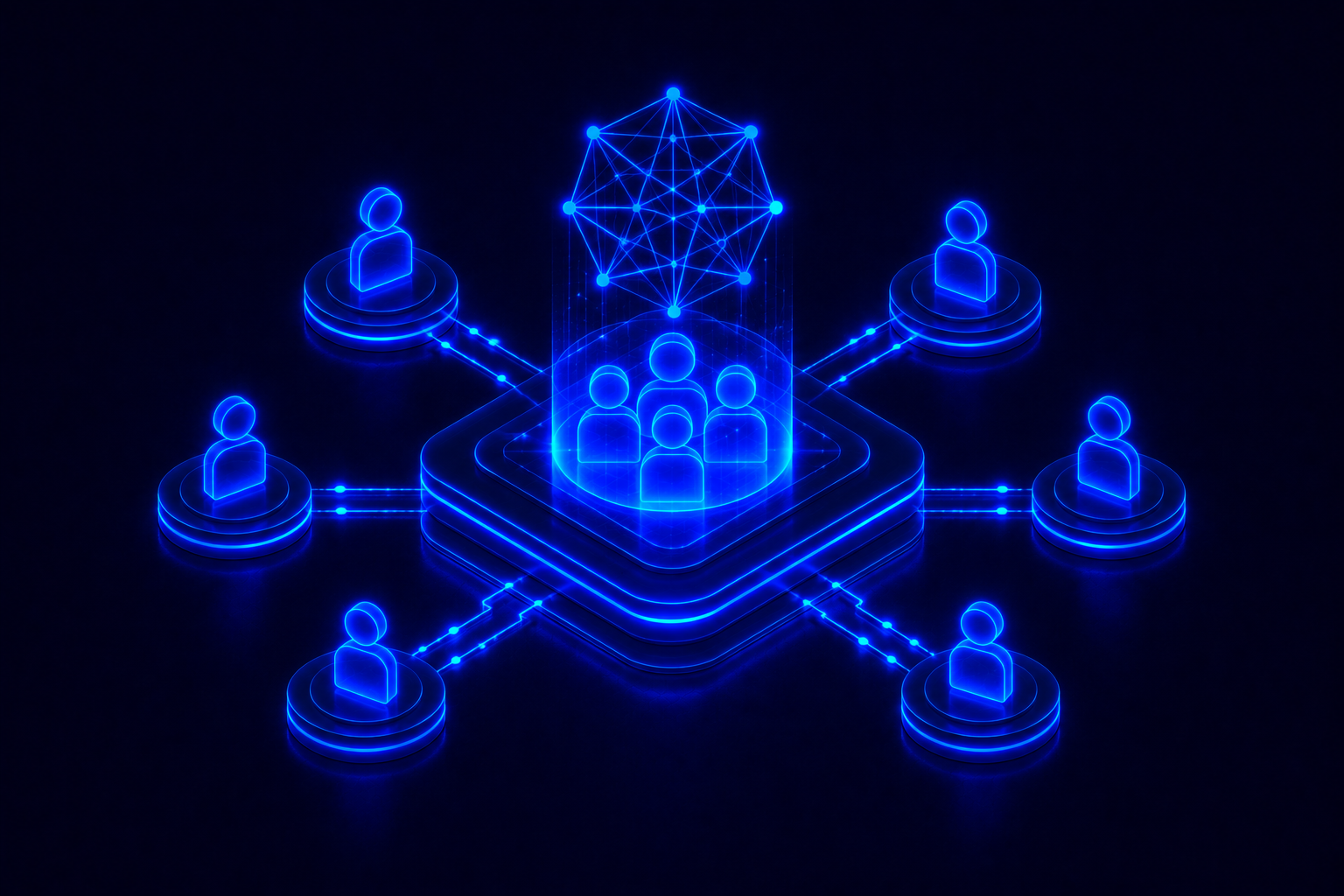
Decentralized Autonomous Organizations (DAOs): Redefining Collective Decision-Making
Organizations have traditionally relied on centralized leadership structures to make decisions, allocate resources, and coordinate activities. While effective in many cases, these models often depend on intermediaries and hierarchical control. Blockchain technology introduces an alternative approach: Decentralized Autonomous Organizations (DAOs). DAOs enable communities, projects, and businesses to coordinate and govern themselves through transparent rules encoded…