

Blockchain has transformed the way digital assets are owned and transferred, while artificial intelligence has changed how software learns, reasons, and makes decisions.
The convergence of these technologies is giving rise to a new generation of applications powered by Autonomous Agents.
Unlike traditional software that waits for user instructions, autonomous agents can monitor information, make decisions based on predefined goals, interact with smart contracts, and execute complex workflows with minimal human involvement.
As Web3 infrastructure matures, these intelligent agents are expected to become an essential part of decentralized ecosystems.
What Are Autonomous Agents?
Autonomous agents are software entities capable of independently performing tasks, making decisions, and interacting with digital environments.
Within blockchain ecosystems, these agents can communicate with decentralized applications, analyze on-chain data, execute transactions, and coordinate with other agents—all while following predefined objectives.
Rather than simply responding to commands, they continuously evaluate conditions and act when appropriate.
Why It Matters
Continuous Automation
Agents operate around the clock without requiring constant user supervision.
Intelligent Decision-Making
AI enables agents to analyze data and adapt their actions based on changing conditions.
Faster Execution
Routine blockchain operations can be completed automatically and efficiently.
Scalable Coordination
Multiple agents can collaborate to perform complex decentralized workflows.
How It Works
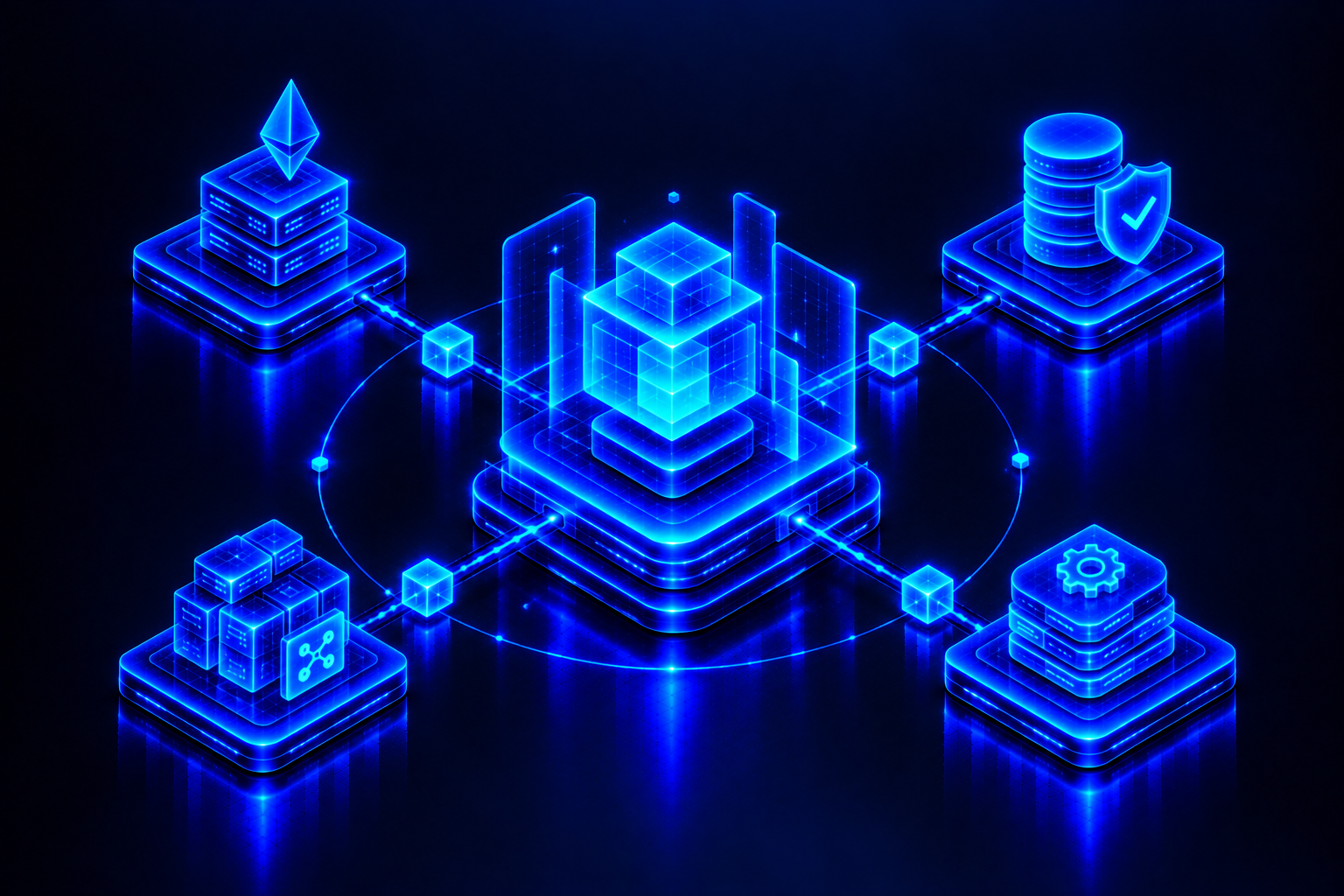
An autonomous blockchain agent typically consists of four core layers:
Perception Layer
The agent gathers information from blockchain networks, APIs, and external data sources.
Intelligence Engine
AI models evaluate available information and determine the best course of action.
Execution Layer
The agent interacts with smart contracts, decentralized applications, or digital wallets.
Feedback Loop
Results are continuously monitored, allowing the agent to improve future decisions.
Together, these components enable intelligent automation across decentralized environments.
Use Cases
Automated Portfolio Management
Agents monitor market conditions and rebalance digital assets according to predefined strategies.
DAO Operations
Routine governance activities, proposal monitoring, and treasury management can be partially automated.
Supply Chain Monitoring
Agents verify product movements, update blockchain records, and detect operational anomalies.
Decentralized Customer Services
AI-powered assistants interact directly with blockchain applications while maintaining transparent and verifiable actions.
Challenges
Despite their potential, autonomous agents face several important challenges:
- Secure interaction with smart contracts
- Reliable access to external data
- Managing AI decision accuracy
- Protecting user assets and permissions
- Establishing accountability for autonomous actions
These challenges will shape how intelligent blockchain systems evolve in the coming years.
The Future of Autonomous Web3
The next generation of decentralized applications may no longer rely solely on direct human interaction.
Instead, users will delegate objectives to intelligent agents that negotiate, analyze, transact, and coordinate on their behalf across multiple blockchain networks.
As artificial intelligence and decentralized infrastructure continue to converge, autonomous agents could become the operational layer of Web3—working continuously behind the scenes to make decentralized systems more efficient, responsive, and accessible.
The future is autonomous:
people won’t manage every blockchain interaction manually—intelligent agents will act on their behalf, turning decentralized networks into truly self-operating ecosystems.

Leave a Reply