
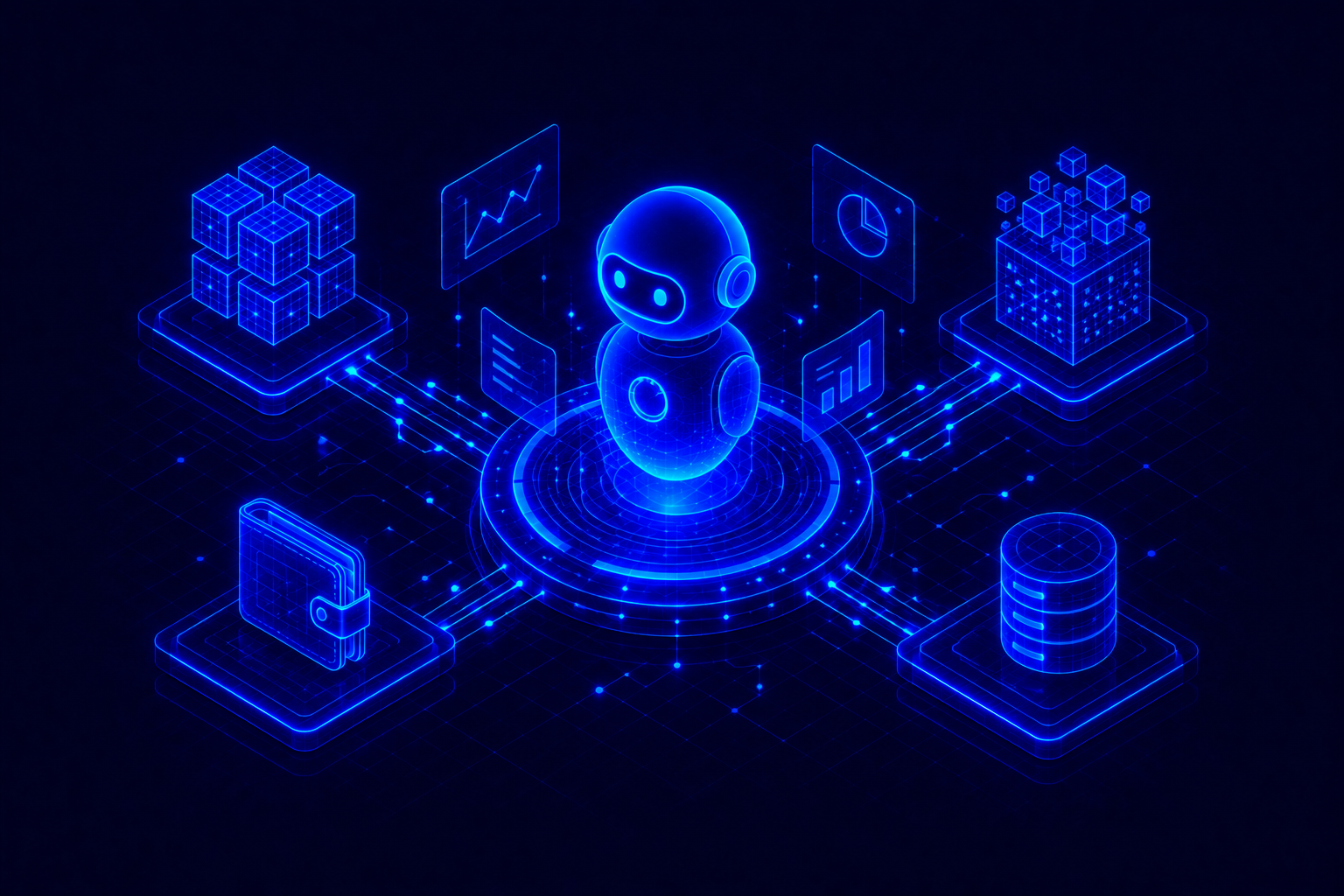
Artificial Intelligence is rapidly transforming how software interacts with users. At the same time, blockchain technology is creating decentralized systems that operate without centralized control.
The convergence of these two technologies is giving rise to a new concept:
Autonomous AI Agents in Web3.
Instead of acting solely as assistants that respond to human commands, AI agents are beginning to make decisions, execute transactions, manage digital assets, and interact directly with decentralized applications.
This evolution could fundamentally change how people engage with blockchain ecosystems.
What Are Autonomous AI Agents?
An autonomous AI agent is a software entity capable of observing information, making decisions, and performing actions with minimal human intervention.
Within Web3, these agents can interact with smart contracts, wallets, decentralized exchanges, governance systems, and on-chain data.
Rather than simply providing recommendations, they can actively execute predefined objectives on behalf of users.
Why It Matters
Smarter Automation
AI agents can monitor markets, analyze conditions, and perform actions continuously without manual oversight.
Personalized Blockchain Experience
Each user can delegate repetitive blockchain activities to intelligent software.
Faster Decision Making
Agents process large amounts of data far more quickly than humans.
Always-On Participation
Unlike people, autonomous agents can operate 24 hours a day across global blockchain networks.
How It Works
An autonomous Web3 agent typically consists of four core components:
Intelligence Layer
Analyzes information, understands objectives, and plans actions.
Wallet Integration
Controls digital assets through secure blockchain wallets.
Smart Contract Interaction
Communicates directly with decentralized applications.
Feedback Loop
Continuously evaluates outcomes and adjusts future decisions.
Together, these components allow AI agents to participate as active members of decentralized ecosystems.
Use Cases
Portfolio Management
Automatically rebalance digital assets based on predefined strategies.
DeFi Optimization
Monitor lending platforms, liquidity pools, and yield opportunities.
DAO Governance
Analyze proposals and vote according to user preferences.
Digital Commerce
Negotiate prices, complete purchases, and manage recurring blockchain payments.
Challenges
Despite their enormous potential, autonomous AI agents introduce several important challenges:
- Wallet security
- Permission management
- Trustworthy decision-making
- Regulatory uncertainty
- Accountability for autonomous actions
Building secure guardrails will be essential before widespread adoption.
The Future of Intelligent Decentralization
Web3 has already decentralized ownership and transactions. The next phase may decentralize decision-making itself.
Instead of manually interacting with every decentralized application, users could rely on intelligent agents that understand their goals and act accordingly.
As artificial intelligence becomes more capable and blockchain infrastructure becomes more accessible, autonomous agents may evolve from helpful tools into trusted digital collaborators.
The future is autonomous:
people won’t interact with every blockchain application directly—they’ll delegate many of those interactions to intelligent agents acting securely on their behalf.



Leave a Reply