
Category: Uncategorized
-

Restaking: Expanding Blockchain Security Beyond Staking
Blockchain networks rely on economic incentives to maintain security, validate transactions, and discourage malicious behavior. In Proof-of-Stake systems, participants lock or delegate digital assets to help secure the network and earn rewards in return. But what if the economic security provided by staked assets could also support other decentralized services? This is the idea behind…
-

Decentralized Identity: Redefining Digital Ownership and Privacy
The digital world depends on identity. From accessing financial services to signing into applications and verifying personal information, users constantly need to prove who they are or demonstrate that they meet specific requirements. However, traditional digital identity systems often rely on centralized organizations that store and manage personal information. This creates challenges around privacy, data…
-

Intent-Based Architecture: A New Way to Interact With Web3
Blockchain applications have become increasingly powerful, but interacting with them can still be complicated. Users often need to choose networks, manage gas fees, compare liquidity sources, approve transactions, and understand the technical steps required to complete a simple action. What if users could describe what they want to achieve instead of specifying every step needed…
-

Verifiable AI: Building Trust in Artificial Intelligence Through Blockchain
Artificial intelligence is becoming increasingly powerful, influencing everything from financial decisions and automated trading to identity verification and decentralized applications. However, as AI systems become more autonomous, an important question emerges: How can we trust the results produced by an AI system when we cannot easily verify how those results were generated? Traditional AI applications…
-

Preconfirmations: Making Blockchain Transactions More Predictable
Blockchain transactions are often described as fast or slow based on how quickly they are included in a block. But for many applications, the real problem is not simply transaction speed. It is uncertainty. When a user submits a transaction, they may not immediately know whether it will be included, when it will be included,…
-

DePIN: Bringing Blockchain Into the Physical World
Blockchain technology has traditionally been associated with digital assets, financial applications, and decentralized software. But its potential is not limited to the digital world. A new category of blockchain-powered infrastructure is emerging around a simple idea: What if physical infrastructure could also be built, operated, and coordinated through decentralized networks? This concept is known as…
-
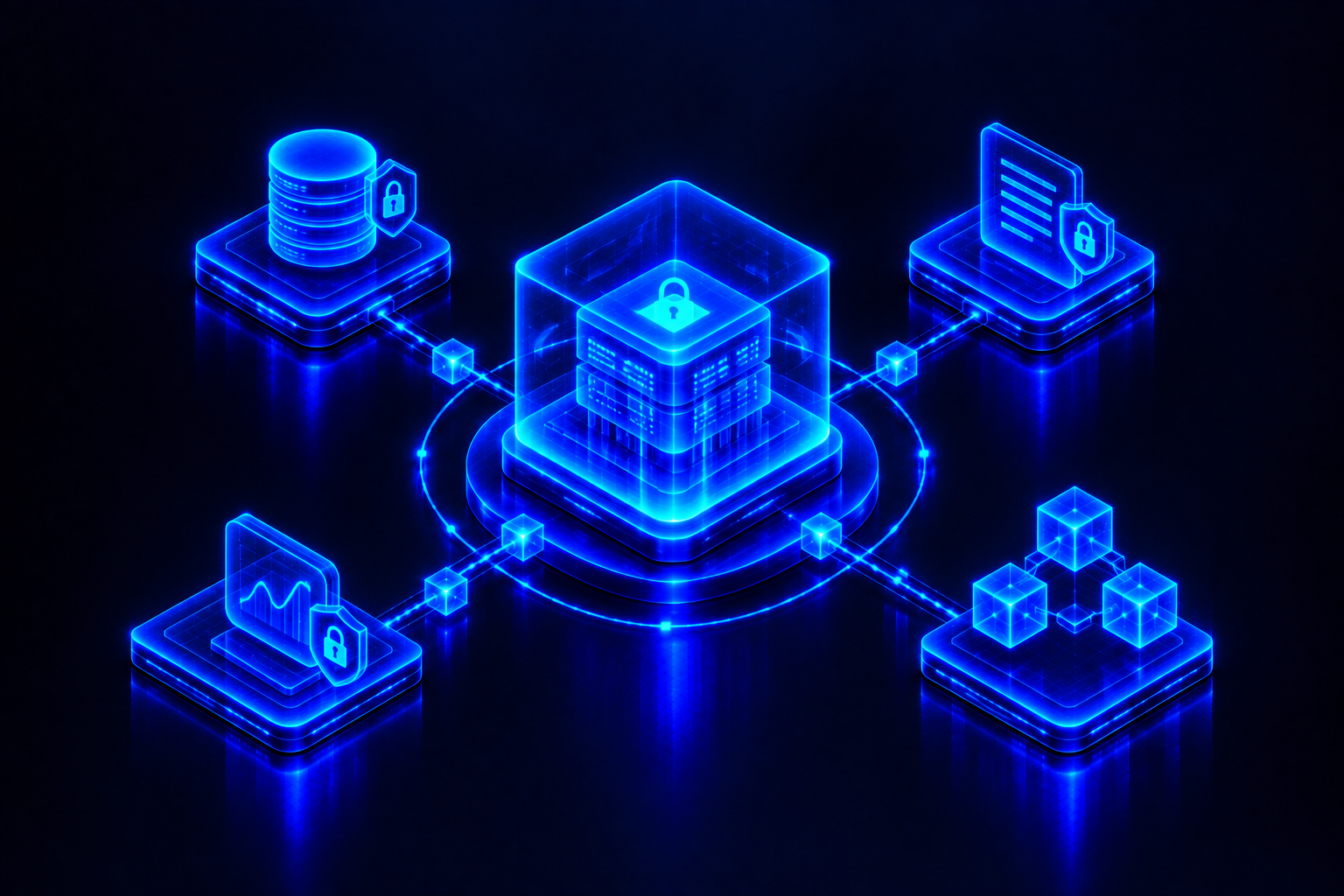
Confidential Computing in Blockchain: Protecting Data Without Losing Trust
Blockchain networks are built around transparency. Transactions, smart contract interactions, and network activity can often be publicly verified. This transparency is one of the fundamental strengths of decentralized systems. But it also creates a difficult challenge. Many applications need to process sensitive information that cannot simply be exposed to an entire network. Financial strategies, business…
-

On-Chain Order Books: Bringing Traditional Market Structure to DeFi
Decentralized finance has introduced new ways to trade digital assets without relying on traditional financial intermediaries. For years, however, most decentralized exchanges have relied heavily on Automated Market Makers (AMMs). AMMs provide liquidity through mathematical formulas and liquidity pools, making decentralized trading accessible and highly composable. But another model is gaining attention: On-Chain Order Books.…
-

Decentralized Storage: Rethinking How Data Lives on the Internet
The modern internet depends heavily on centralized storage infrastructure. Photos, documents, application data, and digital assets are typically stored on servers controlled by a relatively small number of companies. This model provides convenience and scalability, but it also creates dependencies. A centralized provider can control access to data, change storage policies, experience outages, or become…
-

AI Agents in Web3: The Rise of Autonomous On-Chain Intelligence
Artificial intelligence is changing how software understands information, makes decisions, and performs tasks. Blockchain, on the other hand, provides programmable environments where transactions and rules can be executed transparently without relying entirely on centralized intermediaries. When these two technologies come together, a new possibility emerges: AI agents that can independently interact with blockchain networks. Instead…