
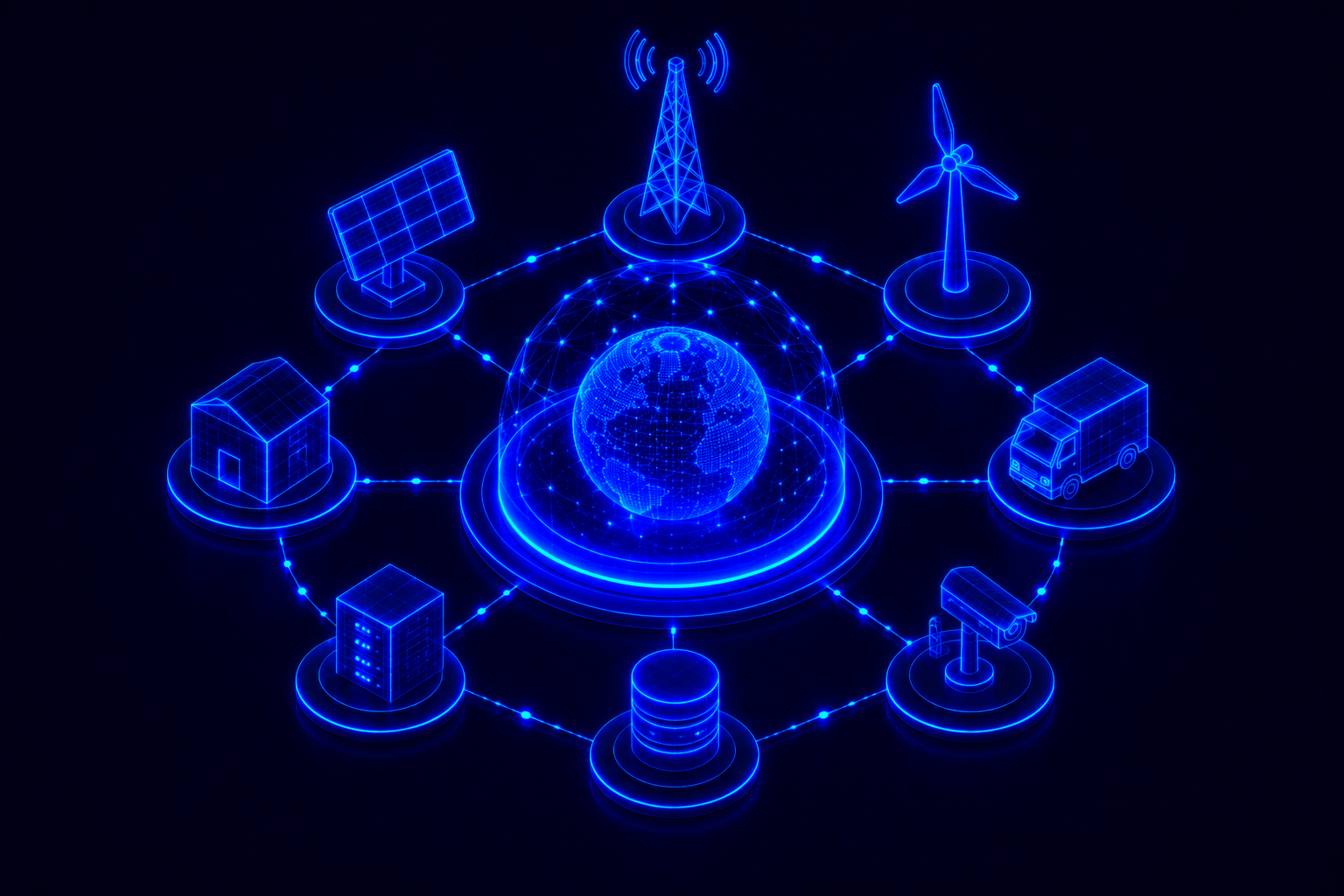
For much of its history, blockchain technology has focused on digital assets, financial systems, and online applications. However, a new movement is extending decentralization beyond software and into the physical world.
This emerging sector is known as Decentralized Physical Infrastructure Networks (DePIN).
By combining blockchain incentives with real-world hardware, DePIN enables communities to collectively build and operate infrastructure that was traditionally owned by large centralized organizations.
What is DePIN?
DePIN refers to networks where individuals contribute physical resources and receive rewards for supporting infrastructure services.
These resources may include:
- Wireless connectivity
- Data storage
- Computing power
- Sensor networks
- Energy infrastructure
- Mapping and geospatial data
Instead of relying on a single company to build and maintain infrastructure, participation is distributed across thousands of independent contributors.
Why It Matters
Distributed Ownership
Infrastructure can be owned and operated by communities rather than centralized entities.
Faster Expansion
Networks grow organically as participants contribute resources.
Economic Incentives
Contributors are rewarded for providing valuable services.
Increased Resilience
Distributed infrastructure reduces single points of failure.
How It Works
A typical DePIN network consists of several components:
Physical Hardware
Participants deploy devices that provide infrastructure services.
Blockchain Layer
Records contributions and coordinates incentives.
Verification Systems
Measure and validate resource availability.
Token Economy
Rewards contributors based on network participation.
Together, these components create self-sustaining infrastructure ecosystems.
Use Cases
Wireless Connectivity
Community-owned networks provide internet coverage.
Decentralized Storage
Participants contribute unused storage capacity.
Distributed Computing
Networks share processing resources for large workloads.
Environmental Monitoring
Sensors collect real-world data at scale.
Challenges
Despite its potential, DePIN faces several obstacles:
- Hardware deployment costs
- Verification accuracy
- Regulatory requirements
- Long-term economic sustainability
- Geographic coverage consistency
Solving these challenges will be essential for large-scale adoption.
The Future of Infrastructure
DePIN represents one of the most significant expansions of blockchain technology beyond purely digital applications. Rather than only coordinating information and assets, decentralized networks can now coordinate physical resources in the real world.
As participation grows, infrastructure may become increasingly community-driven, transparent, and globally distributed.
The future is physical:
blockchain won’t just decentralize digital systems—it may help decentralize the infrastructure that powers everyday life.



Leave a Reply