
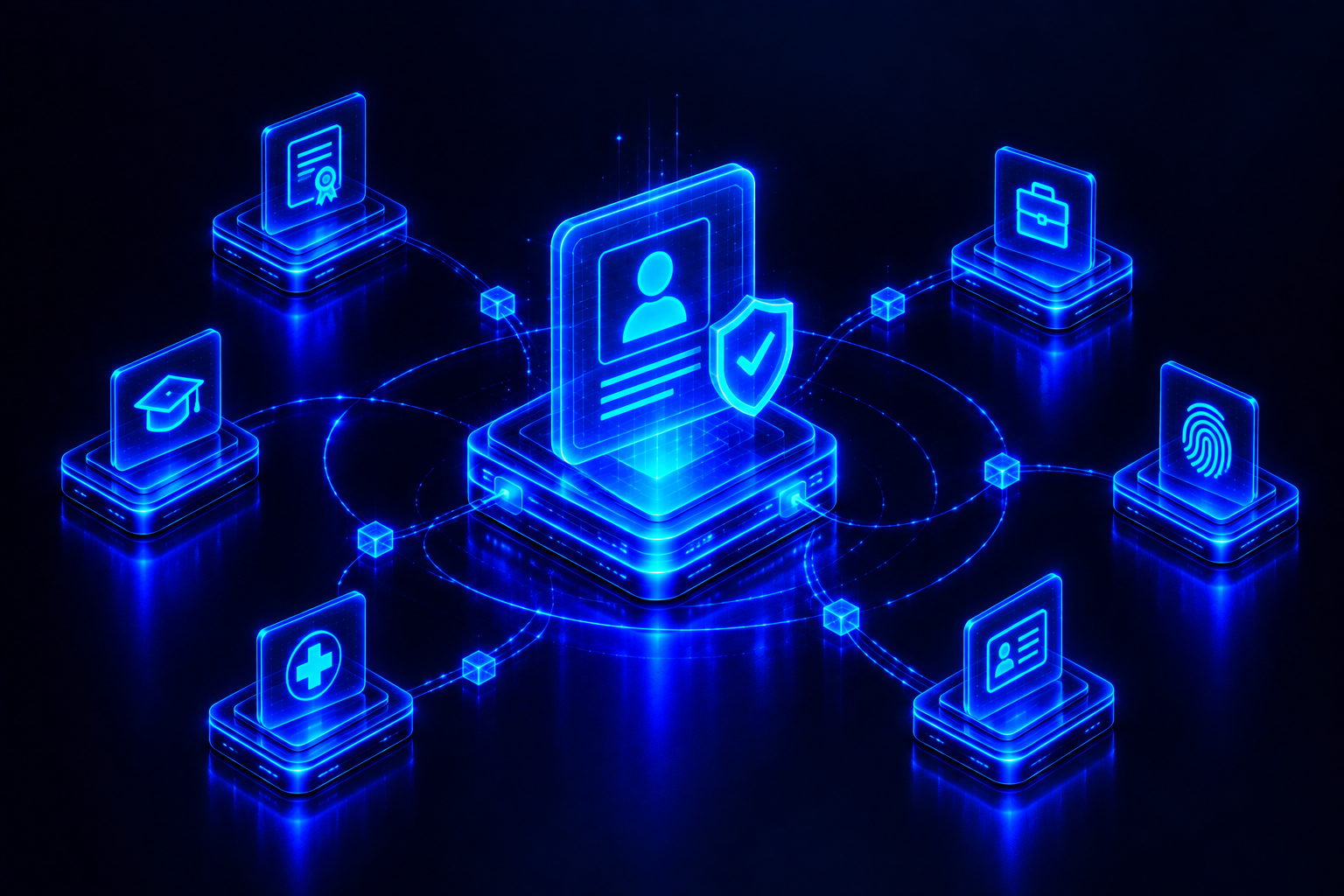
Every day, people use dozens of digital services that require some form of identity.
From financial platforms and social networks to online marketplaces and professional services, users constantly share personal information with centralized organizations.
This creates an important question:
Who should control a person’s digital identity—the platform or the individual?
Decentralized Identity (DID) introduces a different model.
Instead of allowing companies to become the primary owners and controllers of identity information, decentralized identity systems aim to give individuals greater control over how their credentials and personal data are created, stored, and shared.
What Is Decentralized Identity?
Decentralized Identity is an approach to digital identity where individuals can control their identities and credentials without depending entirely on a centralized identity provider.
Users can hold digital credentials that prove specific facts about them without necessarily revealing unnecessary personal information.
For example, instead of sending an entire identity document to prove that someone is over a certain age, a decentralized identity system could allow the user to prove only the required fact.
The principle is simple:
Prove what is necessary—without exposing everything else.
Why It Matters
1️⃣ User-Owned Identity
Individuals can have greater control over their digital credentials instead of relying on a single platform.
2️⃣ Improved Privacy
Users can share only the information required for a specific interaction.
3️⃣ Reduced Data Silos
Identity information can become more portable across different applications and services.
4️⃣ Better Digital Trust
Cryptographically verifiable credentials can make it easier for applications to verify claims without relying entirely on centralized databases.
How It Works
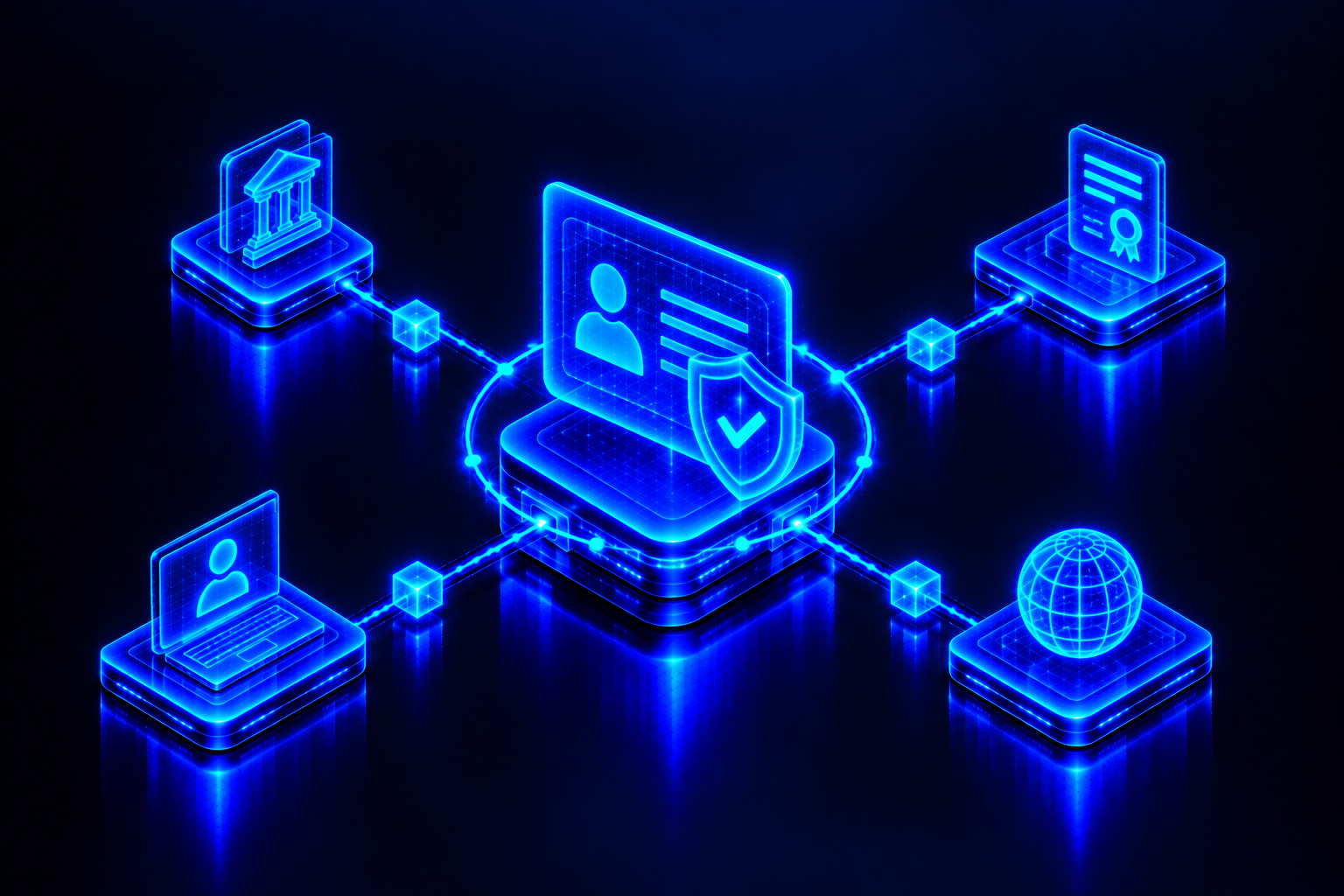
A decentralized identity ecosystem generally includes several components:
🔹 Decentralized Identifier
A unique identifier that can be controlled by the user and referenced without requiring a traditional centralized identity provider.
🔹 Digital Wallet
A secure environment where users can store credentials and manage their identity information.
🔹 Verifiable Credentials
Digitally signed claims issued by trusted organizations that can be independently verified.
🔹 Verification Layer
Applications can verify whether a credential is authentic and whether it was issued by a trusted source.
Together, these components create a portable and user-controlled identity layer.
Use Cases
Financial Services
Users can prove eligibility or identity requirements without repeatedly submitting the same information to different institutions.
Education
Universities can issue digitally verifiable academic credentials that students can use across different platforms.
Professional Identity
Certifications, qualifications, and employment credentials can become easier to verify and share.
Online Communities
Users can prove reputation, membership, or eligibility without exposing unnecessary personal information.
Privacy and Selective Disclosure
One of the most powerful ideas behind decentralized identity is selective disclosure.
Traditional identity systems often require users to provide much more information than an application actually needs.
A decentralized approach can allow a user to reveal only the required attribute.
For example:
A service may need to know whether a person meets an age requirement.
Instead of receiving the user’s full date of birth, address, and identity information, the system could verify only the relevant eligibility claim.
This can significantly reduce unnecessary exposure of personal data.
Challenges
Decentralized Identity also faces several important challenges:
- Key management
- Credential recovery
- Interoperability
- Privacy protection
- Adoption by institutions
- Regulatory compliance
- User experience
A decentralized identity system must be secure enough for sensitive credentials while remaining simple enough for everyday users.
If managing identity becomes too complicated, mainstream adoption becomes difficult.
The Future of Digital Identity
The internet was built around accounts controlled by individual platforms.
A user might have one identity for a bank, another for a social network, and another for an online service.
Decentralized Identity offers a different vision: a portable digital identity that can move with the user.
Instead of creating a new identity for every platform, users could carry verified credentials across different ecosystems while maintaining greater control over what they share.
This could transform how people interact with financial services, education, healthcare, professional platforms, and decentralized applications.
The future is user-owned:
your digital identity should not belong to the platforms you use—it should belong to you.

Leave a Reply