

Blockchain networks are excellent at verifying transactions, but they are not designed to perform large and complex computations directly on-chain.
Artificial intelligence models, scientific simulations, data analysis, and other computational workloads can require enormous amounts of processing power.
Moving these tasks off-chain improves efficiency—but it introduces a fundamental question:
How can we trust a computation that happened somewhere else?
This is where Verifiable Compute comes into play.
Verifiable Compute enables external computation to be performed efficiently while providing cryptographic evidence that the result was calculated correctly.
What Is Verifiable Compute?
Verifiable Compute is a technology that allows one party to perform a computation and another party to independently verify that the result is correct without necessarily repeating the entire computation.
Instead of forcing the blockchain to execute every computational step, the heavy workload can happen off-chain.
A compact cryptographic proof is then generated and submitted for verification.
This creates a powerful combination:
Off-chain computation + On-chain verification
Why It Matters
1️⃣ Scalable Computation
Complex workloads can be processed outside the blockchain without overwhelming network resources.
2️⃣ Trustless Results
Applications can verify computational results without blindly trusting the party that performed the computation.
3️⃣ Lower Costs
Only the proof or verification data needs to interact with the blockchain.
4️⃣ AI Integration
Large AI models can potentially operate off-chain while blockchain systems verify important outputs.
How It Works
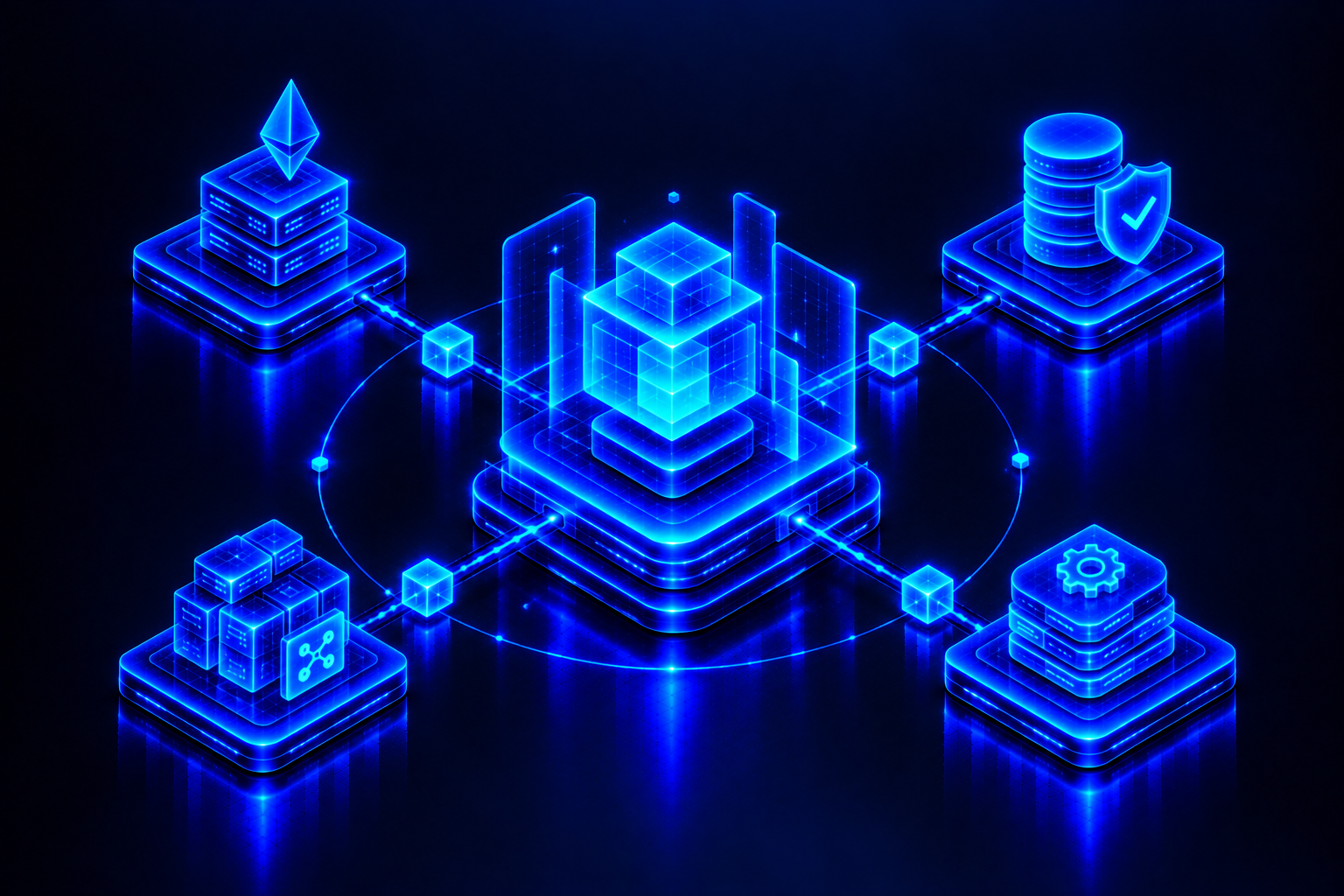
A typical Verifiable Compute architecture includes several components:
🔹 Computation Provider
Performs the requested workload using powerful external infrastructure.
🔹 Computation Result
The provider produces the requested output.
🔹 Cryptographic Proof
A proof is generated demonstrating that the computation followed the required rules.
🔹 Verification Layer
The blockchain or another trusted verifier checks the proof before accepting the result.
This architecture allows decentralized applications to use powerful computation without requiring every node to reproduce the entire workload.
Use Cases
AI Inference
AI models can generate predictions off-chain while providing verifiable evidence of how the output was produced.
DeFi Risk Analysis
Complex financial calculations can be performed externally and verified before being used by smart contracts.
Gaming
Game logic and computationally intensive operations can happen off-chain while important outcomes remain verifiable.
Scientific Computing
Large simulations can be processed using external infrastructure while preserving cryptographic guarantees around their results.
Challenges
Despite its potential, Verifiable Compute still faces several important challenges:
- Proof-generation overhead
- Computational complexity
- Verification costs
- Hardware requirements
- Designing reliable computation protocols
Finding the right balance between computation speed and proof efficiency will be critical for large-scale adoption.
The Future of Trustless Computation
Blockchain does not need to perform every computation itself to remain trustless.
Instead, the future may involve a distributed architecture where powerful external systems perform complex workloads while cryptographic proofs allow decentralized networks to verify the results.
This model could unlock applications that are currently too computationally expensive to run directly on-chain.
As AI, blockchain, and zero-knowledge technologies continue to converge, Verifiable Compute could become one of the foundations of a new generation of decentralized applications.
The future is verifiable:
computation can happen anywhere—but trust should never depend on simply believing the result.


Leave a Reply