
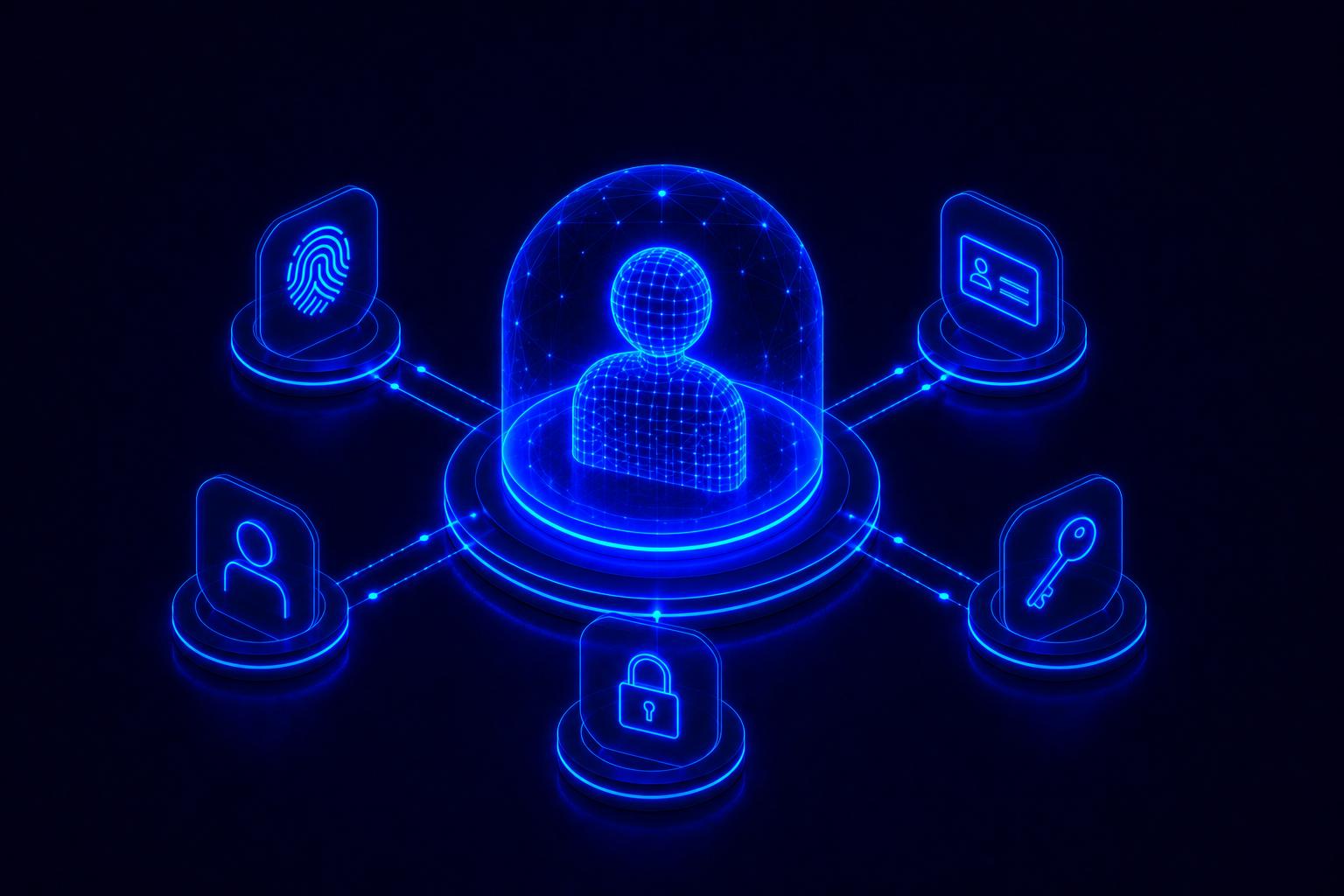
In today’s internet, digital identities are largely controlled by centralized platforms. Every service maintains its own user accounts, credentials, and verification systems, resulting in fragmented identities spread across countless databases.
This model creates challenges related to privacy, security, and user control.
Decentralized Identity (DID) aims to change this by giving individuals direct ownership of their digital identity without depending on centralized authorities.
What is Decentralized Identity?
A Decentralized Identity is a digital identity framework that allows users to create, manage, and control their credentials independently.
Instead of platforms owning user information, individuals hold their own verifiable credentials and decide when, how, and with whom they share them.
The identity remains portable across applications and services.
Why It Matters
User Ownership
Individuals maintain control over their identity data.
Enhanced Privacy
Users share only the information required for a specific interaction.
Improved Security
Reduces reliance on centralized databases that can be compromised.
Cross-Platform Portability
Identity credentials can move seamlessly across ecosystems.
How It Works
A decentralized identity system typically consists of several elements:
Decentralized Identifiers (DIDs)
Unique identifiers controlled by users rather than organizations.
Verifiable Credentials
Digitally signed proofs of qualifications, permissions, or attributes.
Identity Wallets
Applications that securely store identity information.
Verification Layer
Allows third parties to validate credentials without accessing sensitive data.
Use Cases
Digital Authentication
Sign in without usernames and passwords.
Professional Credentials
Verify certifications and qualifications instantly.
Financial Services
Streamline identity verification processes.
Healthcare Records
Enable secure and user-controlled access to medical information.
Challenges
Decentralized identity systems still face important challenges:
- Regulatory compliance
- User experience and adoption
- Credential interoperability
- Secure credential recovery
- Privacy-preserving verification
Addressing these challenges will be essential for widespread adoption.
The Future of Digital Identity
As digital interactions continue to expand, identity will become an increasingly important layer of the internet. Decentralized Identity offers a model where users are no longer dependent on platforms to manage their personal information.
Instead of creating new accounts everywhere, individuals may carry a trusted identity layer across the digital world.
The future is self-sovereign:
your digital identity won’t belong to platforms — it will belong to you.
Leave a Reply