
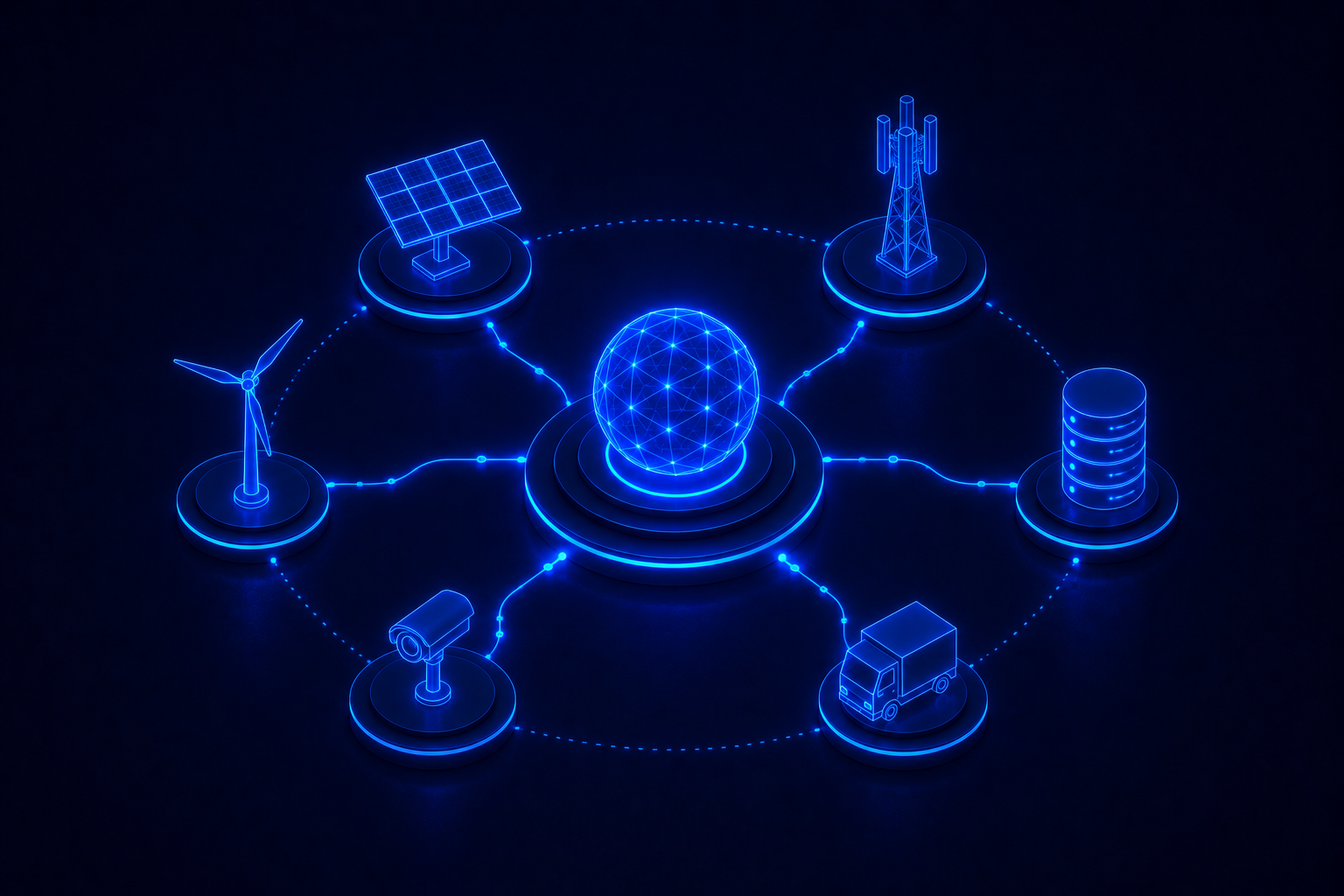
Blockchain is no longer limited to digital assets and online applications. A new movement is emerging that connects decentralized networks with real-world infrastructure — from wireless connectivity and cloud storage to energy grids and sensor networks.
This evolution is known as DePIN (Decentralized Physical Infrastructure Networks).
DePIN combines blockchain incentives with physical infrastructure, enabling communities to build and operate real-world systems in a decentralized way.
What is DePIN?
DePIN refers to blockchain-powered networks where individuals or organizations contribute physical resources to create decentralized infrastructure.
Participants can provide:
- Internet connectivity
- Data storage
- Computing power
- Energy resources
- Sensor data
In return, contributors are rewarded through token-based incentive systems.
Why It Matters
Community-Owned Infrastructure
Networks are built and maintained collectively instead of by centralized corporations.
Lower Infrastructure Costs
Distributed participation reduces the need for massive centralized investment.
Global Scalability
Infrastructure can expand organically through community contributions.
Incentivized Participation
Token rewards encourage growth and long-term sustainability.
How It Works
DePIN systems typically include several layers:
Physical Hardware
Devices such as routers, sensors, GPUs, or storage nodes.
Blockchain Coordination
Tracks contributions, rewards, and network activity.
Token Incentives
Reward participants for providing useful resources.
Verification Mechanisms
Ensure contributors are delivering legitimate services.
Use Cases
Decentralized Wireless Networks
Community-powered internet coverage.
Distributed Cloud Storage
Peer-to-peer data storage infrastructure.
AI Compute Networks
Shared GPU resources for machine learning workloads.
Smart City Sensors
Decentralized environmental and traffic monitoring.
Challenges
Despite its potential, DePIN faces several obstacles:
- Hardware deployment complexity
- Network reliability and maintenance
- Incentive sustainability
- Regulatory considerations in physical infrastructure
The Future of Decentralized Infrastructure
DePIN represents one of the strongest connections between blockchain and the physical world. Instead of relying solely on centralized providers, communities can collaboratively build infrastructure that is open, scalable, and economically aligned.
As adoption grows, DePIN could reshape how critical systems are owned and operated — turning infrastructure into a decentralized, incentive-driven ecosystem.
The future is physical and decentralized:
blockchain won’t just power digital networks — it will help power real-world infrastructure itself.



Leave a Reply