
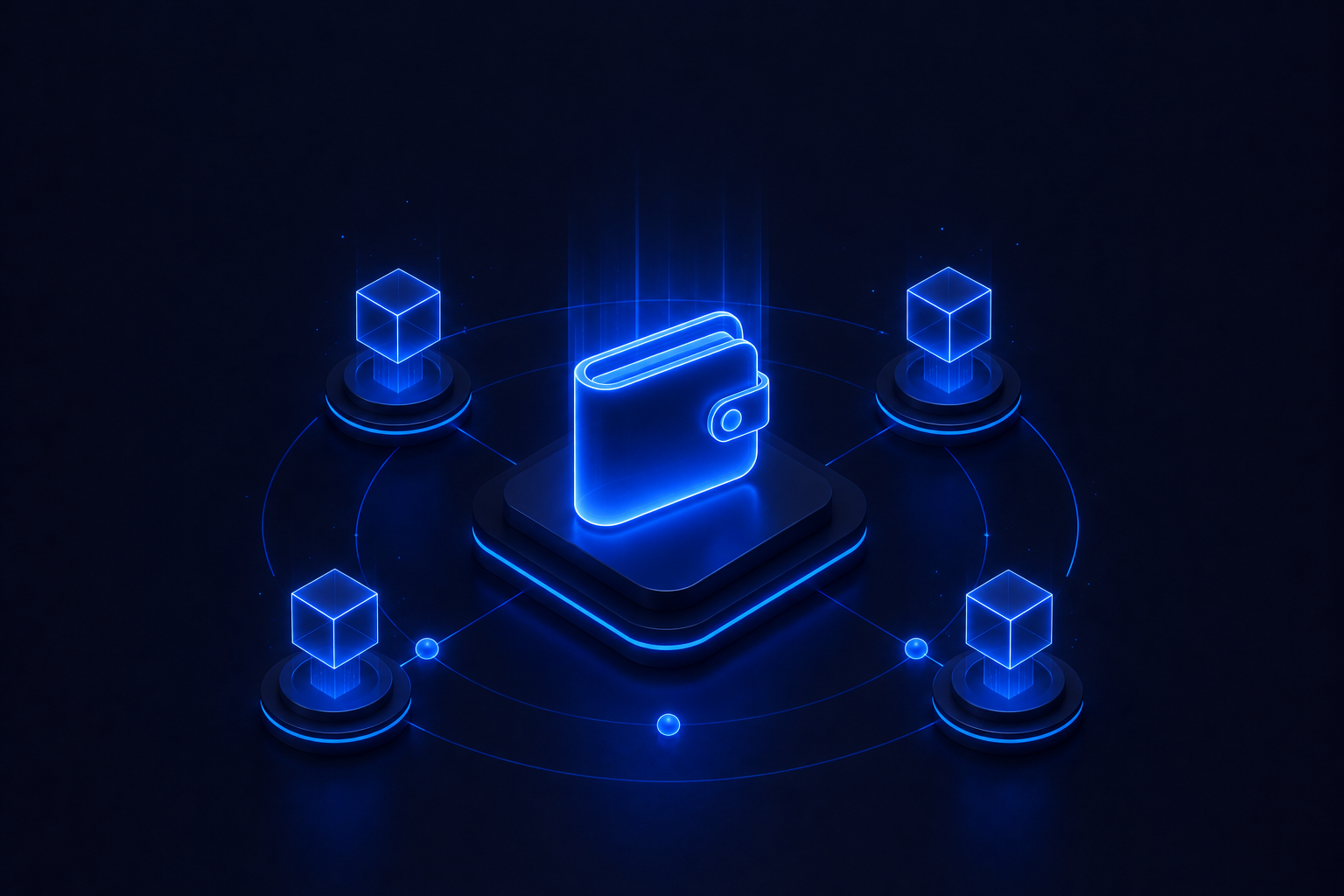
For many users, interacting with blockchain starts — and often stops — at one critical point: the wallet. Managing private keys, handling gas fees, and signing transactions can feel overwhelming, especially for newcomers.
To unlock true mass adoption, blockchain needs a better user experience at the wallet level.
This is where Account Abstraction (AA) comes in — a powerful innovation designed to make crypto wallets smarter, more flexible, and significantly easier to use.
What is Account Abstraction?
Account Abstraction is a design approach that transforms traditional blockchain accounts into programmable smart accounts.
Instead of rigid, key-based control, accounts can now include custom logic for how transactions are authorized and executed.
This means wallets are no longer just storage tools — they become intelligent interfaces.
Why It Matters
Improved User Experience
Users can interact with blockchain without dealing with technical complexities.
Flexible Security Models
Accounts can support multi-signature, social recovery, or biometric-based access.
Gas Abstraction
Users don’t need to hold native tokens to pay transaction fees.
Programmable Behavior
Custom rules can define how and when transactions are executed.
Key Features
Smart Contract Wallets
Accounts operate as programmable contracts rather than static addresses.
Social Recovery
Users can recover access without relying solely on private keys.
Batch Transactions
Multiple actions can be combined into a single transaction.
Sponsored Transactions
Third parties can cover gas fees for users.
Use Cases
Consumer Apps
Enable seamless onboarding without technical friction.
Gaming
Players interact without managing wallets manually.
DeFi Platforms
Simplify complex multi-step transactions.
Enterprise Solutions
Implement custom security and approval workflows.
Challenges
While Account Abstraction improves usability, it also introduces complexity:
- Smart contract security risks
- Standardization across networks
- Infrastructure support requirements
- User education
The Future of Smart Wallets
Account Abstraction is redefining what a wallet can be. By transforming wallets into programmable systems, it removes many of the barriers that prevent users from engaging with Web3.
As this model matures, wallets will evolve from simple key holders into intelligent, adaptive interfaces that make blockchain interactions seamless.
The future is clear:
wallets won’t just store assets — they will think, adapt, and act on behalf of users.


Leave a Reply