
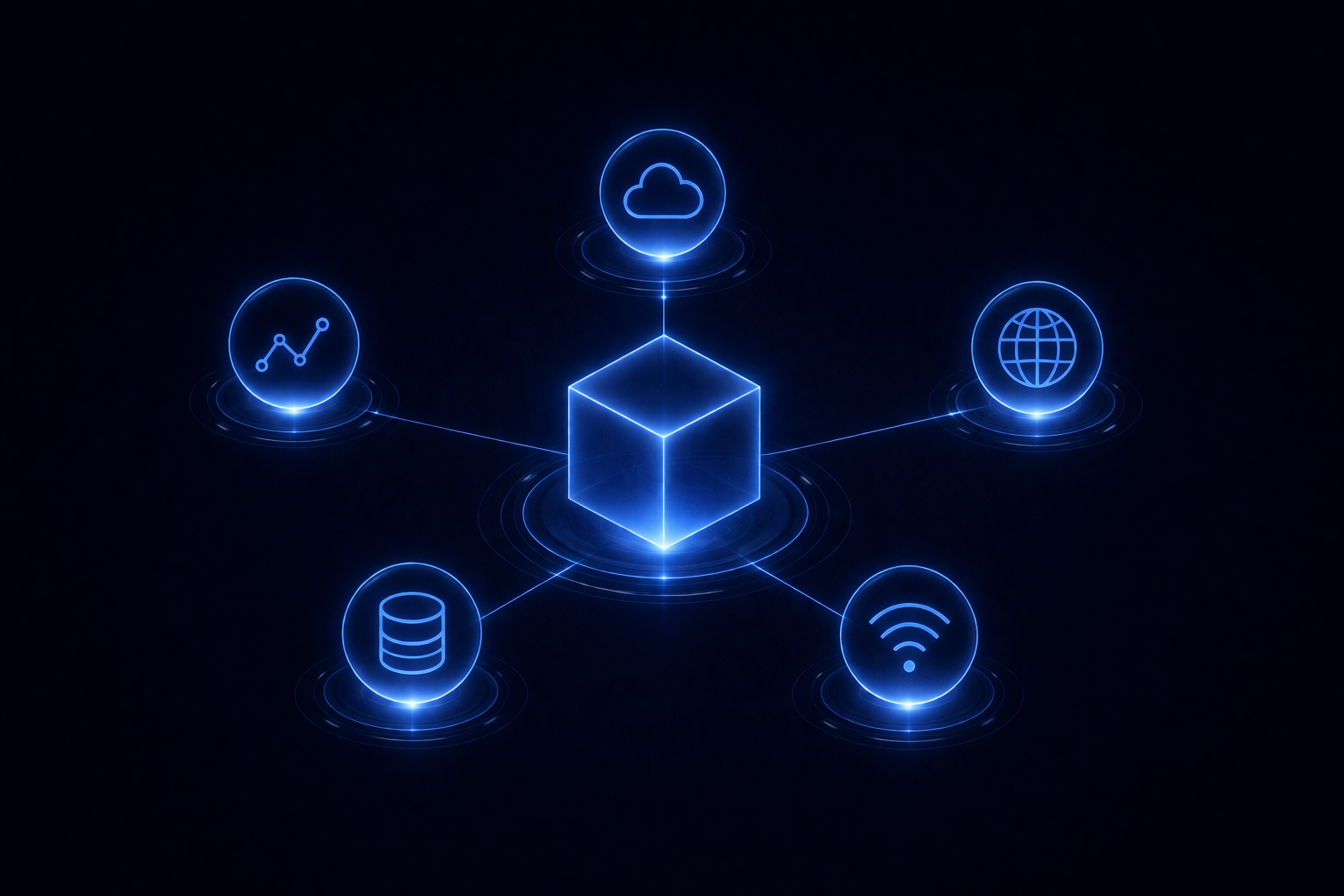
Blockchains are powerful systems for secure and transparent transactions, but they have one fundamental limitation — they cannot access data outside their own network.
Smart contracts, by design, operate in isolated environments. This creates a critical question:
How can blockchain applications interact with real-world data?
The answer lies in Blockchain Oracles — a key component that bridges the gap between on-chain logic and off-chain information.
What Are Blockchain Oracles?
Blockchain oracles are services that provide external data to smart contracts.
They act as intermediaries that fetch, verify, and deliver real-world information — such as:
- Market prices
- Weather data
- Sports results
- API data from external systems
Without oracles, smart contracts would be limited to only the data already stored on the blockchain.
Why It Matters
Expanding Use Cases
Oracles enable blockchain applications to interact with real-world events, unlocking new possibilities.
Automation with Real Data
Smart contracts can execute automatically based on external conditions.
Reliable Decision-Making
Accurate data feeds ensure that contracts behave as expected.
Cross-System Integration
Oracles connect blockchain with traditional systems and APIs.
Types of Oracles
🔹 Software Oracles
Fetch data from online sources such as APIs and databases.
🔹 Hardware Oracles
Collect data from physical devices like sensors and IoT systems.
🔹 Inbound Oracles
Bring external data into the blockchain.
🔹 Outbound Oracles
Send blockchain data to external systems.
🔹 Decentralized Oracles
Use multiple data sources to reduce reliance on a single point of failure.
Real-World Use Cases
DeFi Platforms
Provide real-time price feeds for trading and lending.
Insurance
Trigger payouts based on real-world events like weather conditions.
Supply Chain
Track goods using IoT data and update blockchain records.
Gaming & NFTs
Integrate real-world events into digital experiences.
Challenges
Despite their importance, oracles introduce new risks:
- Data accuracy and reliability
- Centralization risks in oracle providers
- Security vulnerabilities
- Latency in data delivery
Solving these challenges is essential for building trustworthy systems.
The Future of Connected Blockchain Systems
Blockchain oracles are a foundational layer for the evolution of Web3. They enable smart contracts to move beyond isolated logic and interact with the real world in meaningful ways.
As decentralized applications become more sophisticated, the demand for secure, reliable, and decentralized oracle solutions will continue to grow.
The future is clear: blockchain will not operate in isolation — it will be deeply connected to real-world data and systems.

Leave a Reply