
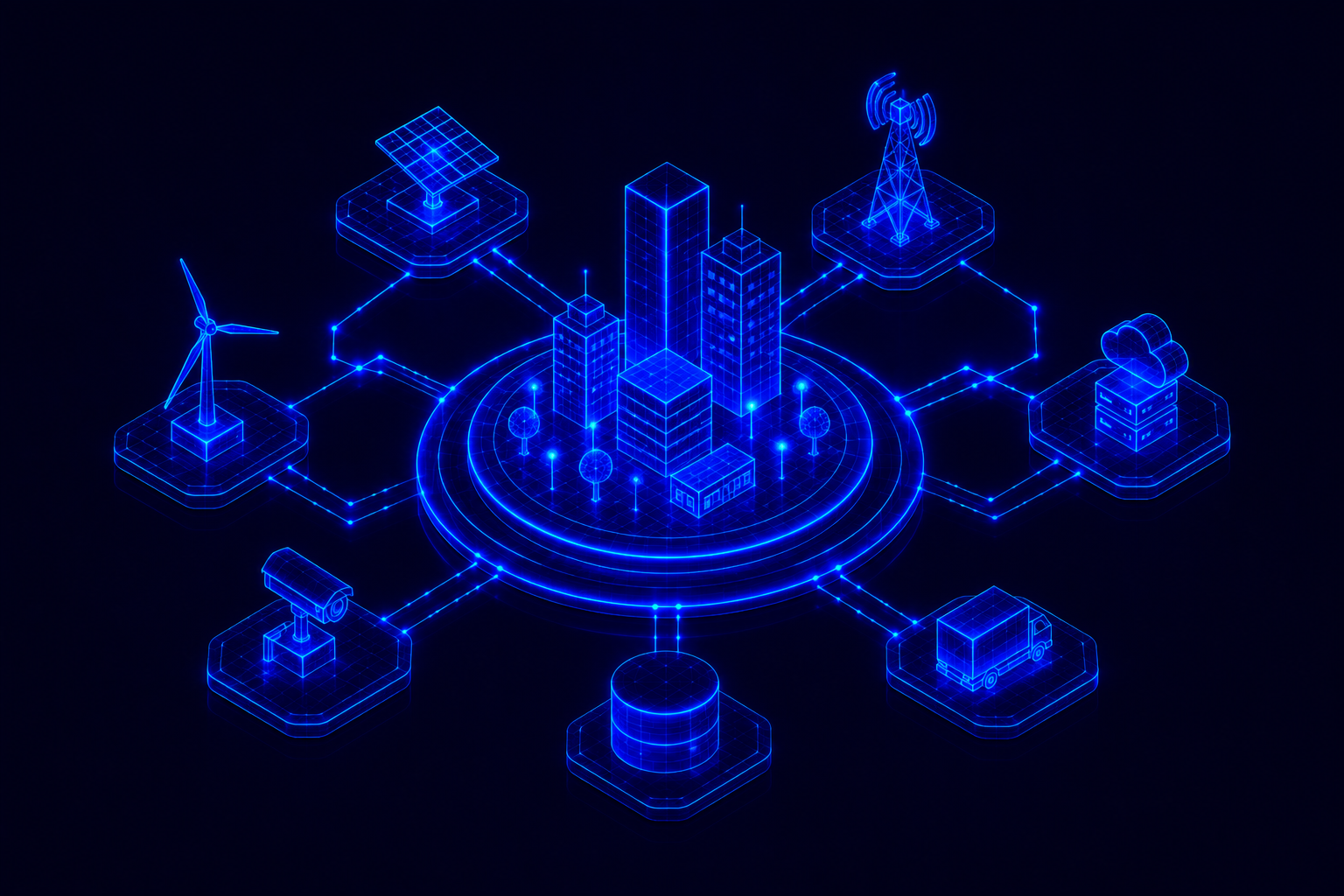
Blockchain technology has traditionally focused on digital assets, smart contracts, and decentralized finance. But a new movement is extending decentralization beyond the digital world.
Decentralized Physical Infrastructure Networks (DePIN) use blockchain to coordinate and incentivize the creation of real-world infrastructure through distributed communities rather than centralized organizations.
From wireless connectivity and cloud storage to mapping services and energy networks, DePIN is redefining how physical infrastructure can be built, owned, and maintained.
What Is DePIN?
DePIN refers to blockchain-powered networks where individuals contribute physical resources to collectively create decentralized infrastructure.
Instead of relying on a single company to own and operate expensive hardware, thousands of independent participants provide resources such as storage, internet coverage, computing power, or sensors.
Blockchain records participation, coordinates the network, and rewards contributors through token-based incentives.
Why It Matters
Community-Owned Infrastructure
Networks grow through contributions from participants instead of centralized providers.
Lower Deployment Costs
Infrastructure expands organically without requiring massive upfront investments.
Global Accessibility
Anyone with compatible hardware can participate and earn rewards.
Greater Network Resilience
Distributed infrastructure is less vulnerable to single points of failure.
How It Works
A typical DePIN ecosystem consists of four key components:
🔹 Physical Hardware
Participants deploy devices such as wireless hotspots, storage nodes, GPUs, or environmental sensors.
🔹 Blockchain Layer
Records contributions, verifies activity, and distributes rewards transparently.
🔹 Incentive Mechanism
Token-based rewards encourage long-term participation and network growth.
🔹 Service Consumers
Individuals and businesses use the decentralized infrastructure just like traditional cloud or connectivity services.
Together, these components create self-sustaining infrastructure owned by the community.
Use Cases
Decentralized Cloud Storage
Users contribute disk space to create distributed storage networks.
Wireless Connectivity
Communities build decentralized internet coverage through shared hotspot devices.
Distributed Computing
GPU owners provide computing power for AI, rendering, and scientific workloads.
Environmental Monitoring
Sensor networks collect real-world data for agriculture, weather forecasting, and smart cities.
Challenges
Despite its significant potential, DePIN faces several important challenges:
- Hardware deployment costs
- Device maintenance
- Regulatory requirements
- Incentive sustainability
- Service quality consistency
As hardware becomes more affordable and blockchain coordination improves, these challenges are expected to become easier to overcome.
The Future of Physical Infrastructure
The internet decentralized information. Blockchain decentralized value. DePIN is beginning to decentralize physical infrastructure itself.
In the coming years, communities may collectively build the wireless networks, storage systems, computing platforms, and sensor networks that power tomorrow’s digital economy.
Rather than depending solely on centralized providers, infrastructure could become a shared resource owned and operated by millions of contributors worldwide.
The future is decentralized:
physical infrastructure won’t belong to a handful of companies—it will be built, maintained, and strengthened by global communities working together.



Leave a Reply