
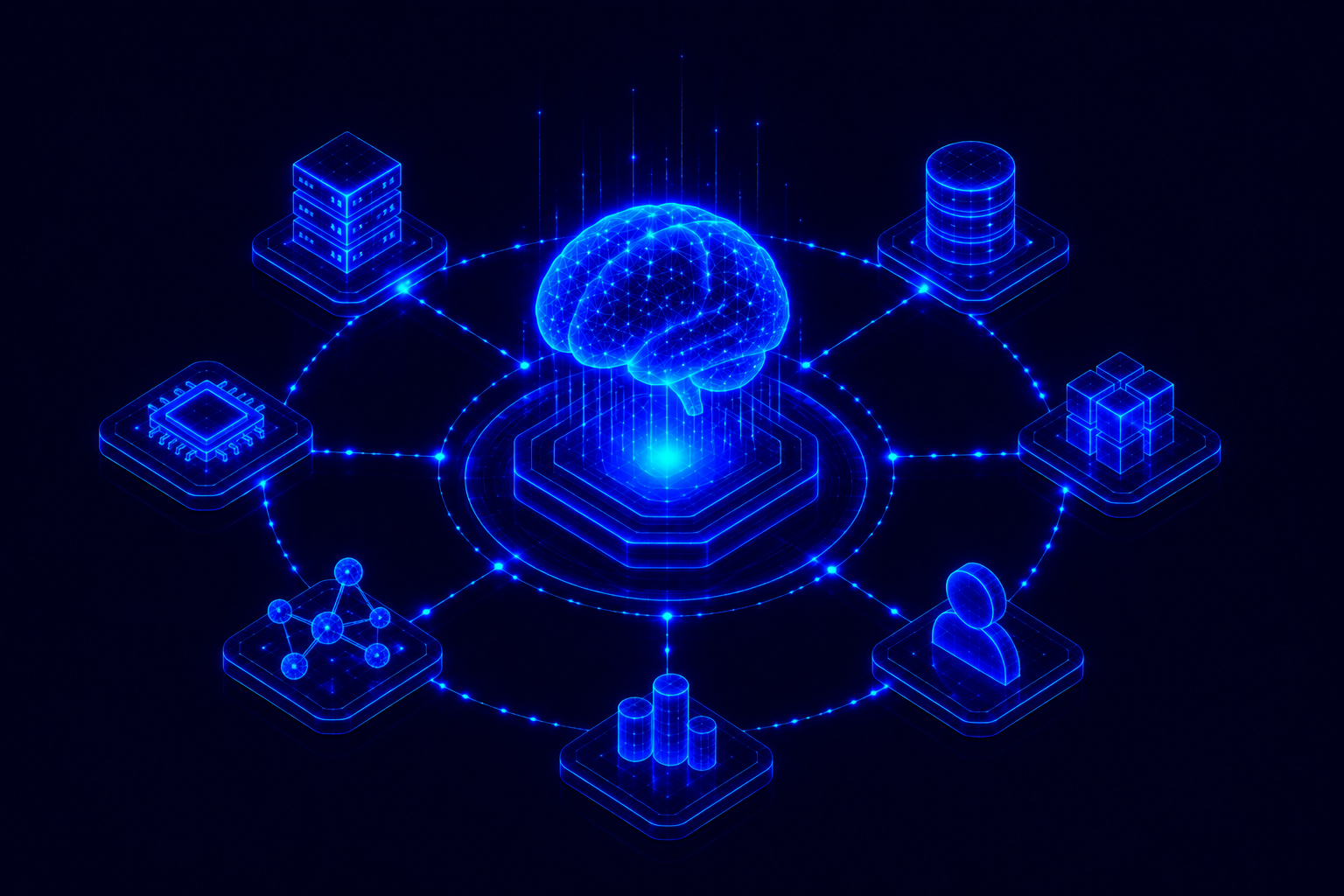
Artificial Intelligence is rapidly becoming one of the most transformative technologies of our time. From content generation to scientific research, AI systems are reshaping how people interact with technology.
However, today’s AI landscape is largely controlled by a small number of organizations that own the infrastructure, data, and computing resources behind these models.
A new movement aims to change that.
Decentralized AI (DeAI) combines blockchain technology with artificial intelligence to create open, transparent, and community-driven AI ecosystems.
Rather than relying on centralized providers, DeAI distributes ownership, governance, and computation across decentralized networks.
What Is Decentralized AI?
Decentralized AI refers to AI systems that leverage blockchain and distributed networks to develop, train, deploy, or operate artificial intelligence models.
Instead of a single company controlling every aspect of an AI platform, different participants contribute computing power, datasets, models, and governance.
Blockchain coordinates these contributions while ensuring transparency, security, and incentive alignment.
Why It Matters
Open Innovation
Developers from around the world can contribute to AI ecosystems without depending on centralized platforms.
Transparent Decision-Making
Blockchain provides auditable records for model updates, governance decisions, and resource allocation.
Fair Incentives
Contributors who provide data, computing resources, or AI models can be rewarded through token-based mechanisms.
Reduced Centralization
Control is distributed among network participants rather than concentrated within a handful of organizations.
How It Works
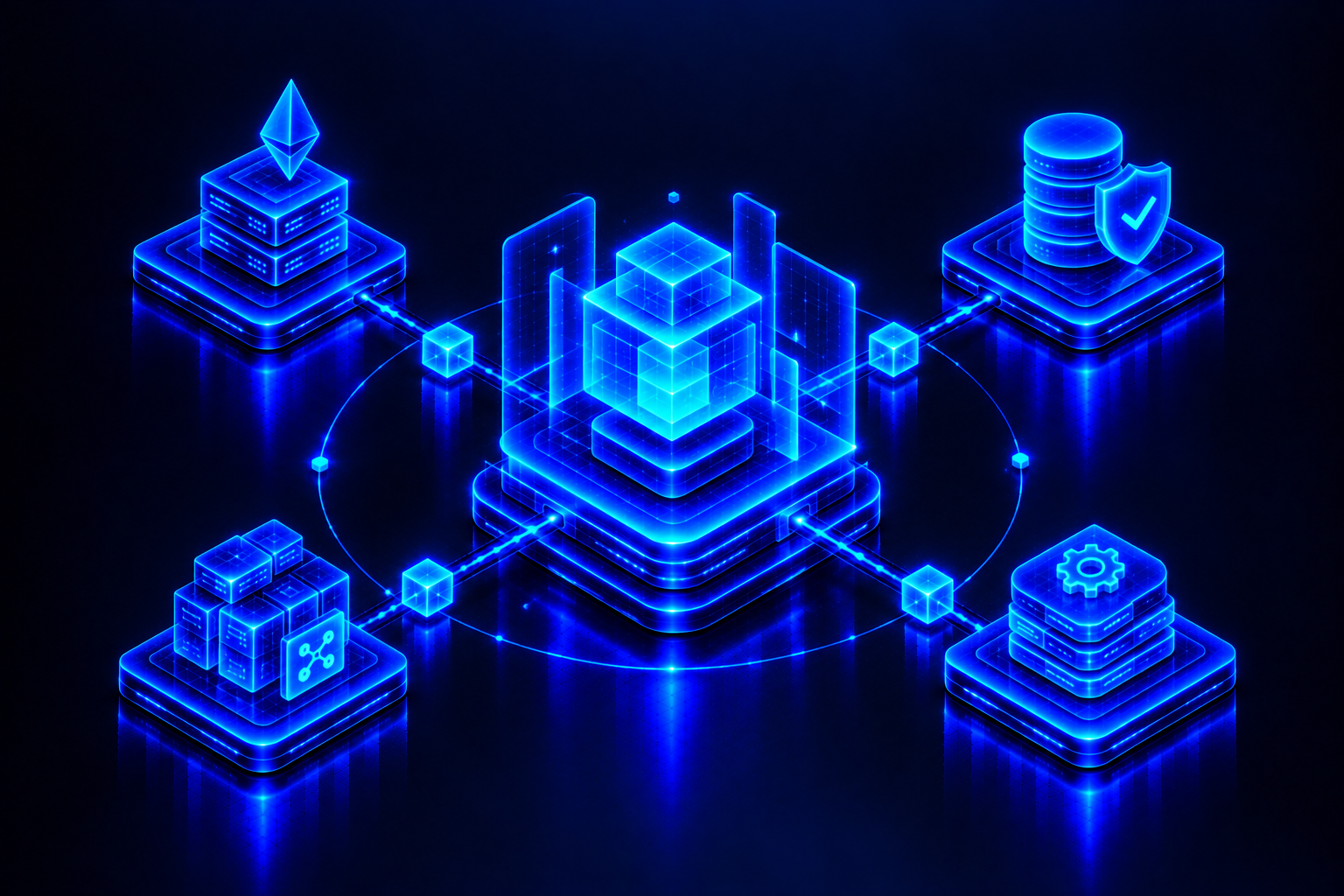
A decentralized AI ecosystem typically includes several core components:
🔹 Distributed Compute
Participants contribute GPUs and computing resources for model training and inference.
🔹 Data Contributors
Communities securely provide datasets while maintaining ownership and transparency.
🔹 Blockchain Coordination
Smart contracts manage rewards, permissions, and governance across the network.
🔹 AI Models
Open or collaboratively developed models deliver intelligent services to users and applications.
Together, these layers create an AI ecosystem that is both collaborative and decentralized.
Use Cases
Decentralized AI Marketplaces
Developers publish, monetize, and access AI models through open networks.
Community-Owned Computing
GPU owners contribute idle computing power for AI workloads.
Privacy-Preserving AI
Sensitive data can be processed through decentralized infrastructures without relying on a single provider.
Autonomous Web3 Applications
AI-powered decentralized applications make intelligent decisions while operating entirely on blockchain infrastructure.
Challenges
Despite its exciting potential, Decentralized AI still faces several important challenges:
- High computational requirements
- Data quality and availability
- Model verification
- Network scalability
- Governance coordination
Addressing these issues will be essential for widespread adoption.
The Future of Intelligence
The evolution of AI does not have to be centralized.
As blockchain infrastructure matures, decentralized networks could provide a more transparent, collaborative, and resilient foundation for intelligent systems.
Instead of AI being controlled by a few organizations, the next generation of intelligence may be built collectively—where developers, researchers, hardware providers, and users all participate in creating and governing the ecosystem.
The future is decentralized:
artificial intelligence won’t simply serve global communities—it may eventually be built, owned, and improved by them.

Leave a Reply