
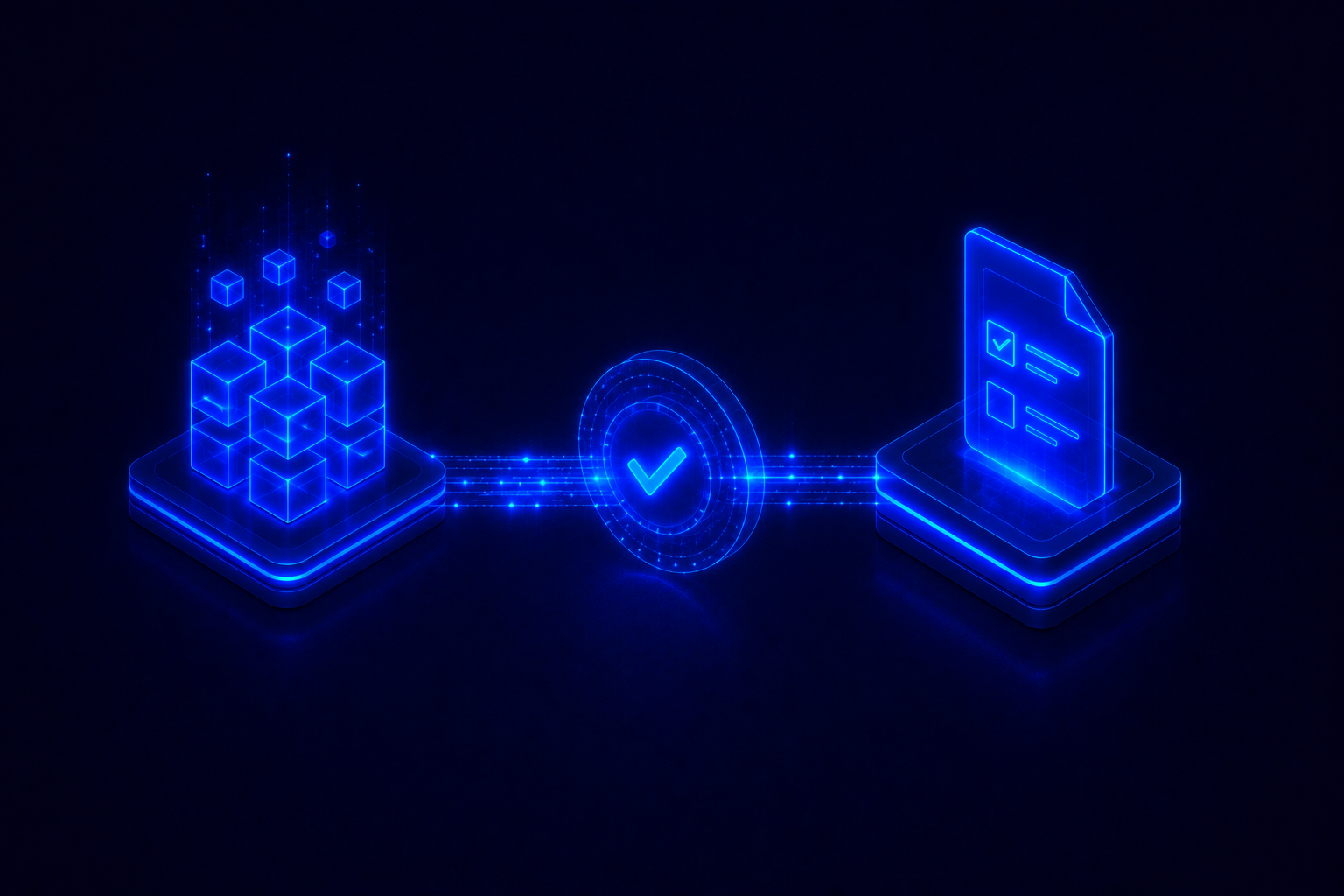
As blockchain applications become more advanced, they increasingly require complex computations. However, performing heavy calculations directly on-chain is often expensive, slow, and inefficient.
This creates a challenge:
How can a blockchain trust a computation without executing it itself?
The answer lies in Verifiable Computation — a technology that allows one party to perform a computation and another party to verify its correctness quickly and efficiently.
What is Verifiable Computation?
Verifiable Computation enables a system to generate cryptographic proof that a computation was executed correctly.
Instead of re-running the entire process, anyone can verify the proof and gain confidence in the result.
The model follows a simple principle:
- Compute once
- Verify everywhere
This dramatically reduces computational overhead while maintaining trust.
Why It Matters
Scalability
Heavy computations can be performed off-chain while preserving verifiability.
Lower Costs
Networks avoid repeatedly executing expensive operations.
Strong Trust Guarantees
Results can be independently verified through cryptographic proofs.
Broader Applications
Enables blockchain systems to support more advanced workloads.
How It Works
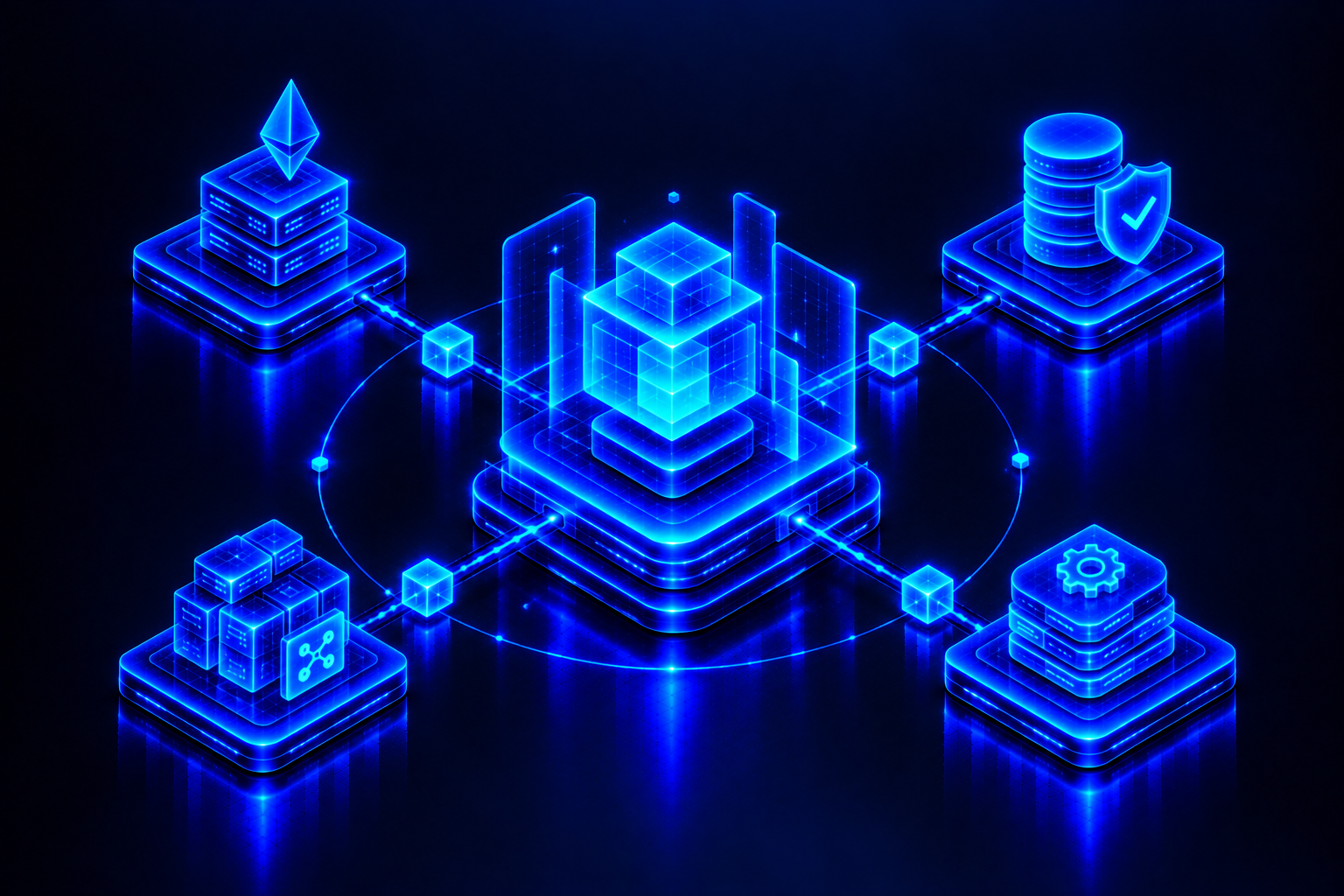
A typical verifiable computation system includes:
Prover
Performs the computation and generates a proof.
Verifier
Checks the proof with minimal computational effort.
Cryptographic Proof System
Mathematically guarantees correctness.
Settlement Layer
Records proof verification on-chain.
The verifier never needs to repeat the original work.
Use Cases
Layer 2 Scaling Solutions
Verify large batches of transactions efficiently.
Artificial Intelligence
Confirm AI-generated outputs without running the entire model.
Data Processing
Validate large-scale computations performed off-chain.
Enterprise Applications
Provide transparent verification for critical operations.
Challenges
Verifiable computation continues to evolve and faces several hurdles:
- Proof generation costs
- Complexity of implementation
- Standardization across ecosystems
- Hardware requirements for large workloads
Despite these challenges, ongoing innovation is rapidly improving performance.
The Future of Trustless Computing
Verifiable Computation represents a fundamental shift in how digital systems establish trust. Rather than relying on repeated execution, systems can rely on mathematical proof.
As blockchain, AI, and decentralized infrastructure continue to converge, verifiable computation may become a core building block of the internet’s next generation.
The future is efficient:
systems won’t need to trust computations blindly — they’ll verify them instantly through proof.

Leave a Reply